
Nevada pedestrian accident liability typically falls on the driver who failed to yield, ran a red light, or was distracted behind the wheel. Nevada law requires drivers to exercise due care around pedestrians, but insurers routinely challenge fault and use the state’s comparative negligence rules to reduce what they pay. Determining who is responsible requires a close look at the evidence.
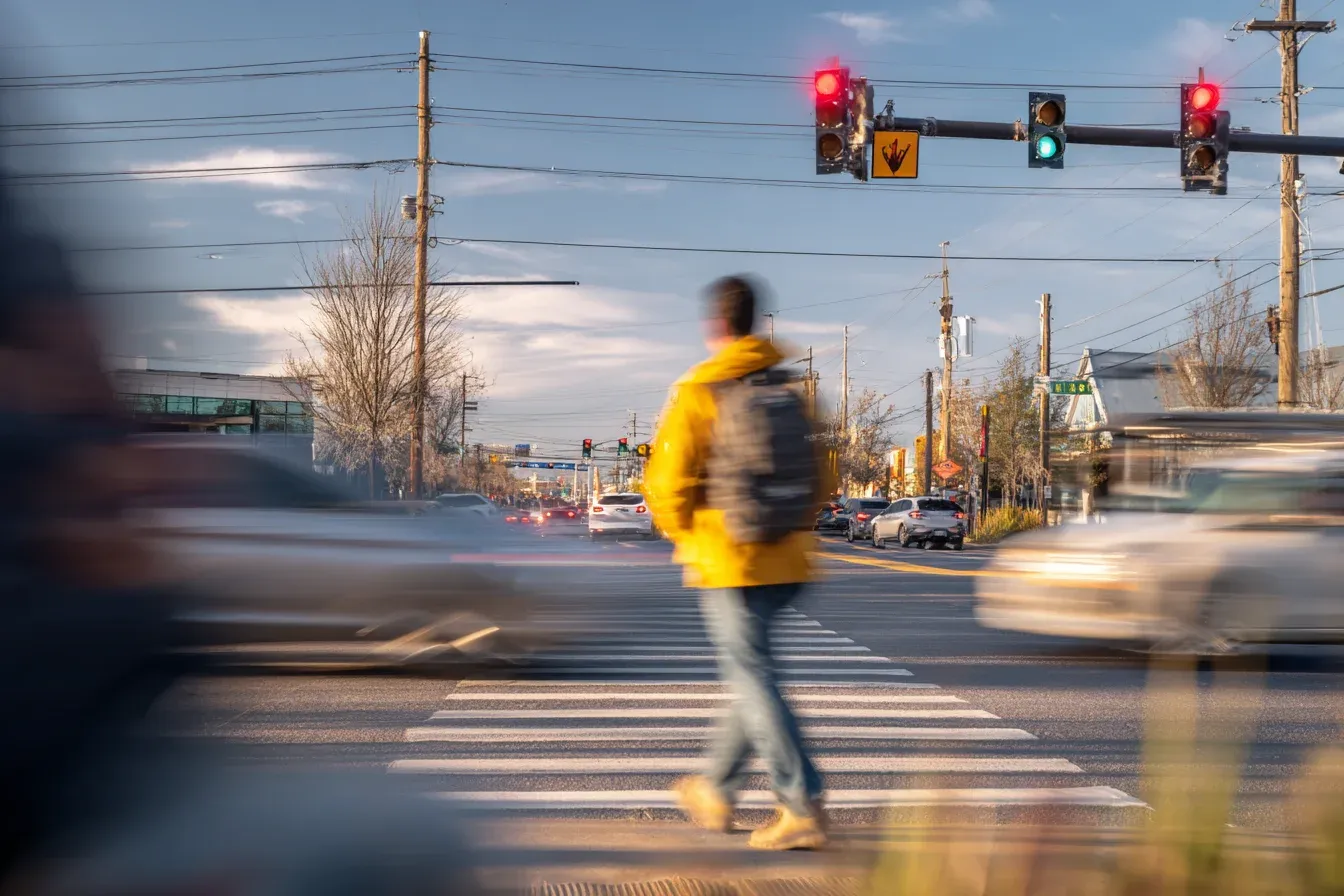
Pedestrian accidents in Las Vegas and across Southern Nevada leave victims dealing with serious injuries, mounting hospital bills, and unanswered questions about who is legally responsible. A collision at a crosswalk on Flamingo Road or a busy intersection near Downtown can result in broken bones, traumatic brain injuries, or spinal damage that requires months of treatment and rehabilitation. Meanwhile, insurance adjusters contact victims quickly, often before the full picture of their injuries is clear, pushing settlements that fall far short of actual losses.
The question of liability is rarely as simple as it looks. Nevada’s comparative negligence rules allow insurers to argue that a pedestrian shares a portion of the fault, which directly reduces the compensation they are required to pay. Factors like crosswalk location, traffic signals, visibility conditions, and driver behavior all play a role in determining responsibility. Without a thorough investigation, critical evidence disappears and victims are left with far less than their case is worth.
In this article, you will discover how Nevada law determines fault in pedestrian accidents, what factors affect liability and compensation, and how a local pedestrian accident attorney can help you hold the responsible party accountable and pursue full recovery.
Who Is Responsible Under Nevada Pedestrian Laws?
In Nevada, the person who violated traffic laws or failed to use reasonable care is responsible for a pedestrian accident. Liability is the legal term for who must pay for injuries and damages. The responsible party can be the driver, the pedestrian, or both depending on what happened.
Nevada uses a comparative fault system. This means both the driver and pedestrian can share blame for an accident under Nevada personal injury laws. The person with the greater fault percentage pays damages to the less at-fault party.
- Driver Responsibility: Drivers must yield to pedestrians in crosswalks and exercise reasonable care to avoid hitting anyone.
- Pedestrian Responsibility: Pedestrians must obey traffic signals and avoid suddenly entering the roadway.
- Shared Fault: Both parties can be partially responsible, which affects how much compensation you can recover.
Most pedestrian accident cases come down to who had the right of way when the crash happened.
Do Pedestrians Always Have Right of Way in Nevada?
No, pedestrians do not always have the right of way in Nevada. Right of way is the legal right to go first in traffic. Nevada law gives pedestrians the right of way in specific situations but requires them to yield in others.
Nevada Revised Statutes 484B.283 and 484B.287 spell out when pedestrians have the right of way. Understanding these rules helps determine who is at fault in an accident.
When Pedestrians Have Right of Way:
- In marked crosswalks when the walk signal is active
- In unmarked crosswalks at intersections
- When already lawfully crossing the street
When Pedestrians Must Yield:
- Crossing outside of marked or unmarked crosswalks
- Crossing against a “Don’t Walk” signal
- Suddenly leaving a curb into a vehicle’s path
Even when pedestrians violate traffic laws, drivers still have a duty to try avoiding a collision if possible. This is called the “last clear chance” doctrine.
Can a Pedestrian Be at Fault?
Yes, a pedestrian can be partially or fully at fault for an accident in Nevada. The state follows modified comparative negligence under Nevada Revised Statute 41.141. You can recover damages if you are 50% or less at fault, but your compensation is reduced by your fault percentage.
Here’s how it works in practice. If you suffer $100,000 in damages and are found 30% at fault, you receive $70,000. If you are 51% or more at fault, you cannot recover any compensation.
Insurance companies often try to blame pedestrians to reduce their payouts. They look for any behavior that might have contributed to the accident.
Common Pedestrian Fault Scenarios:
- Walking while intoxicated or under the influence of drugs
- Texting or talking on a phone while crossing
- Ignoring traffic signals or crossing against the light
- Darting between parked cars into traffic
- Wearing dark clothing at night without reflective gear
Even if you made a mistake, the driver may still bear primary responsibility if they were speeding, distracted, or driving recklessly.
What if You Crossed Outside a Crosswalk?
Crossing outside a crosswalk doesn’t automatically prevent you from recovering compensation. Jaywalking is a traffic violation, but drivers still must watch for pedestrians and drive safely. Courts look at several factors when determining fault in these situations.
Nevada law requires drivers to exercise due care for pedestrian safety regardless of where the crossing occurs. If a driver was speeding, texting, or otherwise negligent, they can still be held liable even when a pedestrian jaywalks.
Factors That Affect Fault When Crossing Outside Crosswalks:
- Visibility conditions: Was it daylight, dusk, or dark? Were streetlights working properly?
- Traffic patterns: How fast was traffic moving? Could the driver have reasonably stopped?
- Distance to nearest crosswalk: Was there a safe crossing area nearby, or would you have had to walk several blocks?
- Driver behavior: Was the driver speeding, distracted, impaired, or otherwise negligent?
Las Vegas has many wide arterial roads with long distances between crosswalks. Courts recognize this reality when evaluating whether a pedestrian’s crossing location was reasonable under the circumstances, and a Las Vegas personal injury lawyer can help demonstrate why your crossing location was reasonable given these conditions.
Who Else Can Be Liable Beyond the Driver?
Multiple parties may share responsibility for a pedestrian accident beyond just the driver who hit you. A thorough investigation often reveals additional sources of liability and compensation.
Identifying all potentially liable parties is crucial because it increases your chances of full compensation. Some parties have deeper insurance coverage or assets than individual drivers.
Other Potentially Liable Parties:
- Employers: When drivers are working during the accident, such as delivery drivers, rideshare operators, or company vehicle operators, their employers may share liability, making it essential to work with a Nevada car accident lawyer who understands employer responsibility laws.
- Vehicle owners: If they negligently allowed an unsafe, unlicensed, or impaired driver to use their car.
- Government entities: Cities or states may be liable for dangerous road designs, broken traffic signals, missing crosswalks, or inadequate lighting.
- Property owners: Businesses may be responsible if overgrown landscaping, poor lighting, or obstructed views on their property contributed to the accident.
- Bars or restaurants: In limited cases involving drunk drivers who were overserved alcohol.
Government liability claims in Nevada have very short deadlines. If a government entity may be liable, you should consider filing a notice of claim as soon as possible.
What Evidence Proves Fault After a Pedestrian Crash?
Proving fault requires strong evidence, and much of it disappears quickly after an accident. In Las Vegas, surveillance footage from casinos and businesses is often deleted within 7 to 30 days. Acting fast to preserve evidence is critical to building a strong case, which is why knowing what to do after a car accident in Nevada immediately after the crash protects your rights.
We immediately begin investigating your accident to gather and preserve crucial evidence before it’s lost forever. Our team knows what to look for and how to obtain it legally.
Evidence to Preserve Immediately:
- Surveillance video from nearby casinos, businesses, and traffic cameras
- Witness contact information and statements while memories are fresh
- Photos of the accident scene, vehicle damage, traffic signals, and road conditions
- Your injuries and any torn or damaged clothing
Evidence to Gather Quickly:
- Official police report and officer observations
- Driver’s cell phone records to check for distraction
- Vehicle event data recorder information
- Medical records documenting your injuries and treatment
Expert Analysis We Arrange:
- Accident reconstruction to determine how the crash occurred
- Visibility studies analyzing lighting and environmental conditions
- Traffic signal timing analysis
- Road design evaluation by qualified engineers
The sooner you contact us, the better we can preserve evidence and protect your rights.
What Scenarios Commonly Affect Fault in Las Vegas?
Las Vegas presents unique pedestrian dangers that can complicate fault determination. Certain locations and situations create higher risks and more complex liability questions.
Understanding these common scenarios helps explain why determining fault isn’t always straightforward. Each situation requires careful analysis of the specific circumstances.
The Strip and Tourist Areas:
Heavy pedestrian traffic, distracted tourists, and impaired visitors create chaotic conditions. Drivers may be unfamiliar with the area, while pedestrians often ignore traffic signals or cross outside designated areas. Pedestrian bridges exist but aren’t always used.
Casino Entrances and Valet Areas:
These locations have constant vehicle movement with rideshare pickups, taxis, and valet operations. Pedestrians moving from brightly lit casino floors into darker parking areas may be difficult for drivers to see. Poor lighting transitions increase accident risk.
Wide Arterial Roads:
Roads like Sahara Avenue, Tropicana Avenue, and Flamingo Road encourage high speeds due to their width and straight design. Long distances between safe crosswalks lead many pedestrians to cross mid-block, creating dangerous situations.
School Zones:
Reduced speed limits and crossing guards are present during school hours, but drivers don’t always comply. Children’s unpredictable behavior around schools creates additional hazards that drivers must anticipate.
| Location Type | Common Hazards | Typical Fault Issues |
| The Strip | Tourist confusion, alcohol, crowds | Jaywalking vs. driver distraction |
| Arterial Roads | High speeds, few crosswalks | Unsafe crossing vs. excessive speed |
| School Zones | Children present, time restrictions | Failure to yield vs. ignoring signals |
| Casino Areas | Poor lighting, vehicle congestion | Visibility vs. pedestrian awareness |
What Damages Can You Recover After a Nevada Pedestrian Crash?
Pedestrian accidents often result in severe injuries because you have no protection against a multi-ton vehicle. Nevada law allows you to recover compensation for all losses caused by the accident, both financial and personal, and understanding how to get compensation after car accident in Nevada helps ensure you receive everything you deserve.
We fight to recover full compensation for every way the accident has affected your life. Our goal is to get you the resources you need to move forward without financial stress from someone else’s negligence.
Economic Damages Cover Financial Losses:
- Medical expenses: All past and future medical care including emergency treatment, surgery, rehabilitation, medications, and medical equipment
- Lost income: Wages you’ve lost while unable to work and any reduction in your future earning ability due to permanent injuries
- Out-of-pocket costs: Transportation to medical appointments, home modifications for disabilities, and other accident-related expenses
Non-Economic Damages Address Personal Impact:
- Pain and suffering: Compensation for physical pain and emotional trauma from the accident and your injuries
- Loss of enjoyment: Damages for your inability to participate in activities and hobbies you previously enjoyed
- Permanent disability: Compensation for lasting impairments, scarring, or disfigurement that affects your daily life
Punitive Damages in Extreme Cases:
When a driver’s conduct was particularly reckless, such as drunk driving or racing, Nevada courts may award punitive damages. These are designed to punish the wrongdoer and deter similar dangerous behavior.
Nevada has no cap on compensatory damages in personal injury cases, meaning there’s no legal limit on what you can recover for your actual losses.
How Long Do You Have to File a Claim in Nevada?
Nevada’s statute of limitations gives you two years from the accident date to file a personal injury lawsuit. The statute of limitations is a legal deadline that, if missed, prevents you from recovering any compensation regardless of how strong your case is.
This two-year deadline applies to most pedestrian accident cases, but several important exceptions exist. Understanding these exceptions is crucial because missing a deadline can destroy your right to compensation.
Important Deadline Exceptions:
- Minors: Injured children have until two years after turning 18 to file a lawsuit
- Government claims: Special notice requirements and short deadlines apply when a government entity may be liable.
- Discovery rule: In rare cases where injuries aren’t immediately apparent, the deadline may start when you discover the injury
Insurance companies have separate deadlines for reporting accidents, often requiring notice within 30 days. Waiting too long to report can jeopardize your coverage even if you’re still within the lawsuit deadline.
Starting your case early also helps preserve evidence and witness memories that fade over time. The sooner we can investigate, the stronger your case becomes.
What to Do After a Pedestrian Accident in Nevada
The actions you take immediately after being hit by a car can significantly impact your health and your ability to recover compensation. Knowing what to do protects both your physical wellbeing and your legal rights.
We recommend following these steps in order of priority. Your safety comes first, but preserving evidence for your case is also important while the scene is fresh.
Call 911 and Get Medical Care
Call 911 immediately, even if you think you’re not seriously injured. Adrenaline and shock can mask serious injuries that become apparent hours or days later. Accepting ambulance transport creates an official record of your injuries and shows you took the accident seriously.
Document Everything at the Scene
If you’re physically able, take photos of the intersection, traffic signals, the vehicle that hit you, and your visible injuries. Get the contact information for any witnesses before they leave the scene. Write down or photograph the driver’s license plate, insurance information, and driver’s license details.
Ask Nearby Businesses to Preserve Video
Many Las Vegas businesses have security cameras that could have captured your accident. Ask managers at nearby properties if they have cameras and request that they preserve any relevant footage. Most systems automatically delete old recordings within days or weeks.
Avoid Admitting Fault or Making Statements
Don’t say anything that could be interpreted as accepting blame, such as “I’m sorry” or “I didn’t see the car coming.” Insurance adjusters are trained to use these statements against you later. Politely decline to give recorded statements to any insurance company until you speak with an attorney.
Contact Your Insurance Company About Coverage
Report the accident to your auto insurance company and ask about your Uninsured Motorist and Medical Payments coverage. These coverages often apply when you’re injured as a pedestrian and can help pay your immediate expenses while your case develops. Since Nevada is not a no-fault state, the at-fault driver’s insurance should ultimately pay for your damages.
Call Ladah Injury & Car Accident Lawyers Las Vegas
Contacting an experienced attorney immediately ensures that crucial evidence is preserved and your rights are protected from day one. We handle all communications with insurance companies so you can focus on your medical treatment and recovery.
Injured While Walking in Nevada? Get Legal Help Today
Being hit by a car while walking often results in serious injuries that require extensive medical treatment. You’re likely facing mounting medical bills, lost income from missed work, and insurance adjusters trying to minimize your claim or blame you for the accident.
You don’t have to handle this overwhelming situation alone. Ladah Injury & Car Accident Lawyers Las Vegas has the experience and resources to fight for the compensation you deserve while you focus on healing.
Why Choose Our Firm:
- Former insurance defense experience: We know the tactics adjusters use to deny claims and minimize payouts because we used to work for insurance companies
- Proven track record: We have helped injury victims throughout Nevada obtain the resources they need to rebuild their lives.
- No upfront costs: We handle all cases on a contingency fee basis, meaning you pay us nothing unless we win your case
- 24/7 availability: Our team is available around the clock to provide support and answer questions when you need us most
Don’t let an insurance company unfairly shift blame onto you or pressure you into accepting less than you deserve. Call (702) 252-0055 or contact us online for your free, no-obligation consultation today.
Frequently Asked Questions
Do Pedestrians Always Have the Right of Way in Nevada?
No, pedestrians must yield to vehicles when crossing outside crosswalks or against traffic signals. However, drivers must still exercise reasonable care to avoid hitting pedestrians even when pedestrians violate traffic laws.
What Happens if a Driver Hits Someone in a Crosswalk?
Drivers who hit pedestrians lawfully using crosswalks are typically liable for all damages unless the pedestrian suddenly entered the vehicle’s path making the collision unavoidable. Nevada law strongly protects pedestrians who follow traffic rules in designated crossing areas.
Can I Still Recover Compensation if I Crossed Outside a Crosswalk?
Yes, you may still recover damages if the driver was also negligent, such as by speeding, texting, or driving recklessly. Your final compensation may be reduced by your percentage of fault, but you can still recover as long as you’re 50% or less at fault.
Does My Auto Insurance Cover Me When I’m Walking?
Yes, your Uninsured Motorist and Medical Payments coverage typically applies when you’re injured as a pedestrian. These coverages can help pay medical bills and lost wages even if the driver who hit you doesn’t have adequate insurance.
Should I Give a Recorded Statement to an Insurance Company?
No, you should never give a recorded statement to any insurance company without first consulting an attorney. Insurance adjusters are trained to ask questions designed to get you to say something that damages your claim or shifts blame onto you.
What if the Driver Who Hit Me Was a Tourist in a Rental Car?
Accidents involving tourists or rental cars can provide access to multiple insurance policies, potentially increasing the total compensation available. These cases can be complex due to out-of-state drivers and multiple insurance companies, making legal representation especially important.
How Long Do I Have to File a Pedestrian Accident Claim in Nevada?
You generally have two years from the accident date to file a lawsuit, but government entities require formal notice within 180 days. Insurance deadlines are much shorter, often requiring accident reports within 30 days, so it’s crucial to act quickly to protect all your rights.