
Nevada pedestrian right-of-way laws require drivers to yield to pedestrians in marked crosswalks and many unmarked intersections. Pedestrians also carry legal responsibilities that insurers will use against injured victims. Understanding exactly where and when you have the right of way is critical if you were struck by a vehicle and are considering a personal injury claim.
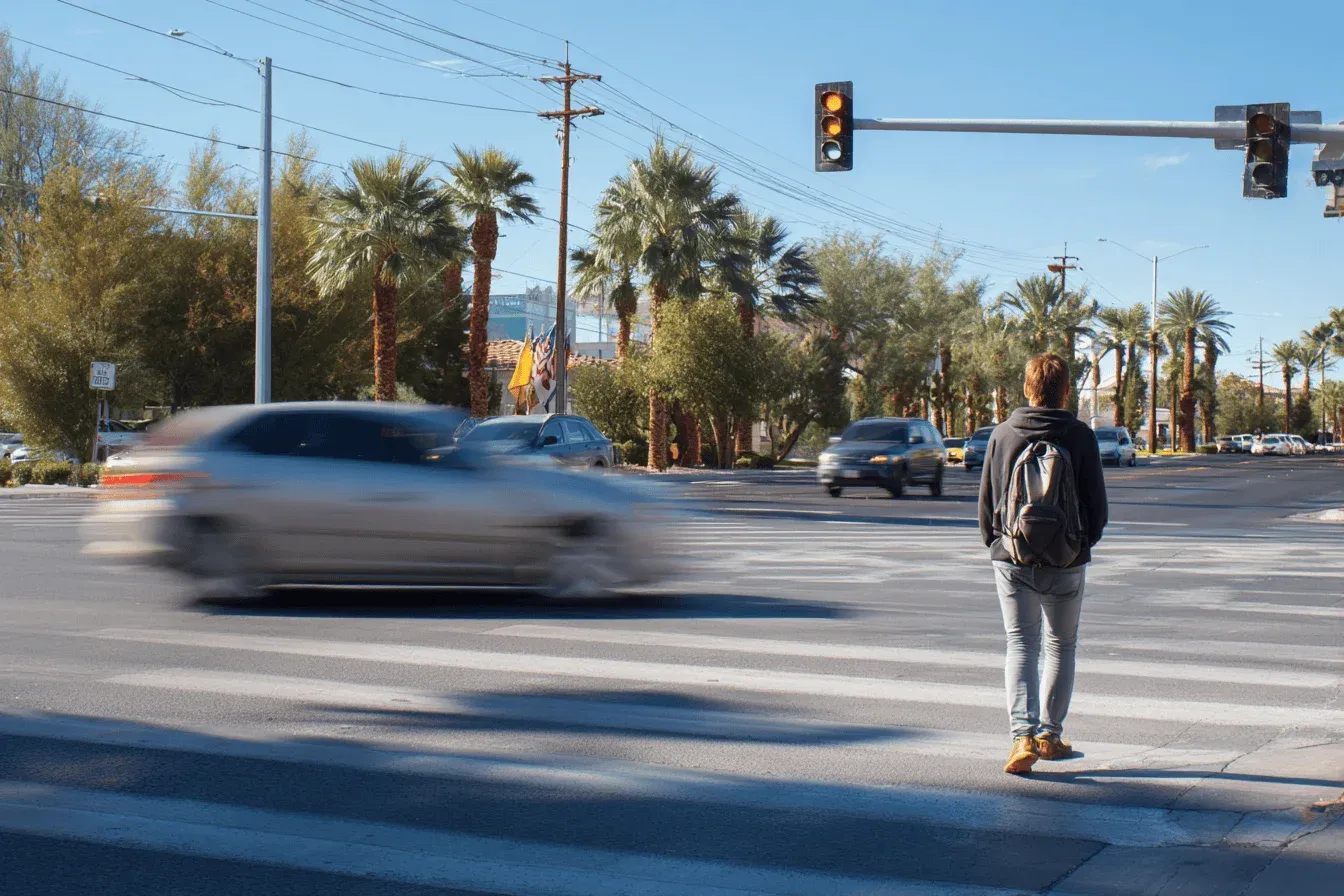
Being hit by a car as a pedestrian in Nevada can result in devastating injuries. Broken bones, traumatic brain injuries, and spinal damage are common outcomes when a human body absorbs the force of a moving vehicle, and the road to physical recovery is often long and expensive. While you are focused on surgeries, physical therapy, and getting back to your normal routine, the driver’s insurance company is already reviewing the details of the accident to determine how much fault they can assign to you.
The challenge is that Nevada’s comparative negligence laws allow insurers to reduce your compensation based on any percentage of fault attributed to you as a pedestrian. They may argue that you crossed outside a crosswalk, stepped into traffic without enough warning, or were distracted at the time of the collision. Without a clear understanding of Nevada’s pedestrian right-of-way laws and how they apply to your specific situation, you risk accepting a settlement that does not reflect the true value of your injuries and losses.
In this article, you will discover how Nevada pedestrian right-of-way laws work, where drivers are legally required to yield, and how a pedestrian accident attorney can help you protect your rights and pursue the full compensation you deserve.
When Do Pedestrians Have the Right of Way
In Nevada, you have the right of way when crossing at marked crosswalks and unmarked crosswalks at intersections. Nevada Revised Statute 484B.283 gives you legal protection in these situations. An unmarked crosswalk exists at every intersection where two roads meet, even without painted lines on the pavement.
Right of way means drivers must stop completely and stay stopped until you clear their lane plus the adjacent lane. This is Nevada law under NRS 484B.280, not just a courtesy from drivers.
You have the right of way in these specific situations:
- Marked crosswalks with signals: You can cross when the pedestrian signal shows “Walk” or when you have a green light.
- Unmarked crosswalks at intersections: You have the right of way at any intersection, even without painted crosswalk lines.
- Traffic signal controlled areas: You must follow pedestrian signals where they exist to keep your right of way.
What Are the Rules at Marked and Unmarked Crosswalks
Marked crosswalks have painted white lines showing where to cross. Unmarked crosswalks are the invisible crossing areas at every intersection where sidewalks would naturally continue across the street.
Pedestrian signals tell you when it’s safe to cross. A “Walk” sign or walking person symbol means you can start crossing, but stay alert for turning cars. A flashing hand or “Don’t Walk” means don’t start crossing, but if you’re already in the street, keep walking to safety.
Nevada law stops drivers from passing another car that’s already stopped for you at a crosswalk. This rule prevents many serious injuries.
| Crossing Type | Your Rights | Driver Duties |
| Marked crosswalk with “Walk” signal | Full right of way to cross | Must stop and wait for you to pass |
| Unmarked crosswalk at intersection | Right of way when crossing safely | Must yield to you |
| Mid-block crossing (no crosswalk) | Must yield to traffic | Should still use reasonable care |
When Must Pedestrians Yield and Is Jaywalking Illegal
You must yield to vehicles when crossing outside marked or unmarked crosswalks, according to Nevada Revised Statute 484B.287. Jaywalking means crossing the street illegally, and yes, it is illegal in Nevada and can get you a ticket.
Nevada law prohibits these specific actions:
- Diagonal crossing: You cannot cross an intersection diagonally unless traffic signals specifically allow it.
- Sudden movement: You cannot step off a curb into a vehicle’s path when the driver has no time to stop.
- Between controlled intersections: You must use crosswalks when crossing between two intersections that have traffic signals.
Getting a jaywalking ticket does not automatically prevent you from getting compensation if a driver hits you. Nevada uses comparative negligence, which means you can still recover money for your injuries if you are 50% or less at fault.
What Are Driver Duties to Pedestrians in Nevada
Nevada law requires all drivers to use “due care” to avoid hitting you, even when you’re not following traffic rules. Nevada Revised Statute 484B.280 says drivers must always watch for pedestrians.
Drivers have these legal duties to protect you:
- Stop and stay stopped: When you’re in a crosswalk, drivers must wait until you’ve cleared their lane and the next lane over.
- Check before turning: Drivers must look for you before turning, including right turns on red lights.
- No passing at crosswalks: Drivers cannot go around another car that’s stopped for a pedestrian.
- Yield at driveways: Cars leaving parking lots or driveways must stop and let you pass on the sidewalk.
What Local Las Vegas Rules and Safety Zones Apply
Las Vegas Municipal Code Chapter 11.30 adds extra rules beyond Nevada state law. These apply throughout the city, including the Strip, downtown, and surrounding areas.
Key Las Vegas pedestrian rules include:
- Right-angle crossing: You must cross streets straight across, not diagonally.
- Business district crosswalks: Between intersections with traffic signals, you must use marked crosswalks.
- Sidewalk requirement: You must use sidewalks where they exist instead of walking in the street.
Nevada also creates pedestrian safety zones under NRS 484B.135. These zones have bright yellow signs showing 20 mph speed limits, and traffic fines are doubled. You’ll see these near schools, busy casino areas, and downtown Las Vegas.
What Are the Rules for Blind Pedestrians
Nevada Revised Statute 484B.290 gives blind pedestrians the absolute right-of-way. Any driver must stop completely when a blind person crosses the street with a white cane or guide dog. This protection applies everywhere, not just in crosswalks.
Drivers who fail to yield to blind pedestrians face serious penalties beyond normal traffic violations.
Who Has Right of Way in Parking Lots and Driveways
Pedestrian right of way rules apply in parking lots and private driveways too. Cars leaving any parking lot, garage, or driveway must stop before crossing a sidewalk and yield to you.
This matters in Las Vegas because of large casino and shopping center lots:
- Casino and hotel exits: Cars leaving valet areas must yield to people on sidewalks.
- Shopping centers: Drivers must watch for you in marked walkways and when backing out of spaces.
- Hotel driveways: Cars cannot block sidewalks while waiting to enter traffic.
Many parking lots have marked crosswalks where drivers must yield to you just like on public streets.
How Fault Works in Nevada Pedestrian Accidents
Nevada’s modified comparative negligence rule decides who pays when you’re injured. You can get compensation as long as you’re 50% or less at fault. Your total award gets reduced by your percentage of fault.
Here’s how it works in practice. If you were 30% at fault for crossing mid-block and the driver was 70% at fault for speeding, you’d recover 70% of your damages. If you started crossing against a signal but the driver was texting and could have stopped, a jury would assign fault percentages to both of you.
Insurance companies often blame pedestrians for “darting out” to avoid paying claims. We know their tactics because our attorneys used to work for insurance companies. Our team also investigates whether drivers were distracted, speeding, or otherwise negligent.
What Should You Do After a Pedestrian Accident in Nevada
Your safety and health come first after an accident. The steps you take next protect your wellbeing and your legal rights to compensation.
Call 911 and Get a Police Report
Always call 911 to report the accident and get medical help. A police report creates an official record with the driver’s information, witness statements, and the officer’s initial fault assessment. Get the report number before leaving the scene.
Document the Scene and Your Injuries
Take pictures of everything if you can. Photograph the crosswalk, traffic signals, skid marks, the car that hit you, and your injuries. Keep the clothes and shoes you wore because they can be important evidence later.
Get Medical Care and Follow Orders
Adrenaline hides serious pain after accidents. See a doctor immediately to check for internal injuries, broken bones, or concussions. Following your treatment plan helps your health and shows insurance companies how serious your injuries are.
Notify Your Insurer but Decline Recorded Statements
Report the accident to your insurance company but don’t give recorded statements to any adjuster without talking to a lawyer first. Adjusters ask questions designed to hurt your case later.
Call Ladah Injury & Car Accident Lawyers Las Vegas
Contact us immediately. We send investigators to get critical evidence like video from casinos, businesses, or traffic cameras before it gets deleted. We handle all insurance company communications so you can focus on getting better.
Act Fast Because Deadlines Apply in Nevada
Nevada gives you two years from the accident date to file a personal injury lawsuit. Waiting hurts your case because evidence disappears quickly. Video footage gets erased, witnesses forget details, and physical evidence at the scene disappears.
Government vehicle accidents, like city bus crashes, may have much shorter deadlines for official notice. Don’t risk losing your rights by waiting.
Why Choose Ladah Injury & Car Accident Lawyers Las Vegas
When you’re facing serious injury stress, you need a legal team with experience and strength to fight for you. Personal injury law is all we do at Ladah Injury & Car Accident Lawyers Las Vegas. We have a proven track record of helping clients recover compensation, and we’re ready to put our skills to work for you.
Our advantages include:
- Trial lawyers insurers fear: We have secured substantial jury verdicts for our clients.
- Certified specialist: Attorney Ramzy Ladah is certified as a Personal Injury Specialist by the State Bar of Nevada
- Insurance insider knowledge: Several attorneys used to defend insurance companies, giving us unique advantages against their tactics
- No fees unless we win: You pay nothing unless we recover compensation for you
Injured While Walking in Nevada? Get Legal Help Today
You don’t have to face this fight alone if you were injured in a pedestrian accident. You’re likely dealing with medical bills, lost income, and constant insurance adjuster calls. We handle the entire legal process while you concentrate on healing.
Contact Ladah Injury & Car Accident Lawyers Las Vegas for a free consultation. We’re available 24/7 to answer questions and explain your rights. Call us or fill out our online form to get help today.
Frequently Asked Questions
Do Pedestrians Always Have the Right of Way in Nevada
No, you have the right of way in marked and unmarked crosswalks at intersections. You must yield to vehicles when crossing mid-block or against traffic signals, though drivers must always use due care to avoid hitting you.
Is Jaywalking Illegal in Las Vegas
Yes, crossing outside crosswalks or against signals is illegal and can get you a ticket. A jaywalking citation doesn’t automatically stop you from getting compensation if a negligent driver hits you.
Do Pedestrians Have the Right of Way in Parking Lots
You have the right of way in marked crosswalks and on sidewalks in parking lots. Drivers leaving parking spaces or driveways must yield to you, but stay alert for moving vehicles.
Can a Driver Turn Right on Red if a Pedestrian Is Crossing
No, drivers must stop completely and yield to any pedestrian in the crosswalk before turning right on red. Your safety always comes before the driver’s convenience.
What if I Stepped Off the Curb and the Driver Hit Me
Nevada law prohibits stepping into a vehicle’s path when the driver has no time to stop. Fault depends on whether the driver was speeding, distracted, or otherwise negligent and could have avoided the crash.
How Long Do I Have to File a Pedestrian Injury Claim in Nevada
You have two years from the accident date to file a personal injury lawsuit. The deadline may be much shorter for government agency claims, so contact an attorney immediately.
What Evidence Helps Prove a Crosswalk Accident
The strongest evidence includes the official police report, scene and injury photos, witness statements, and video from nearby cameras. Your medical records also document your injury severity.