
The most common bus injury claims in Las Vegas involve passenger falls, pedestrian collisions, and vehicle crashes. Injuries often occur when buses stop suddenly, passengers slip while boarding or exiting, or buses strike cars, cyclists, or pedestrians. Claims frequently include broken bones, head injuries, spinal damage, and soft-tissue injuries, with liability depending on driver negligence, maintenance failures, or unsafe conditions.
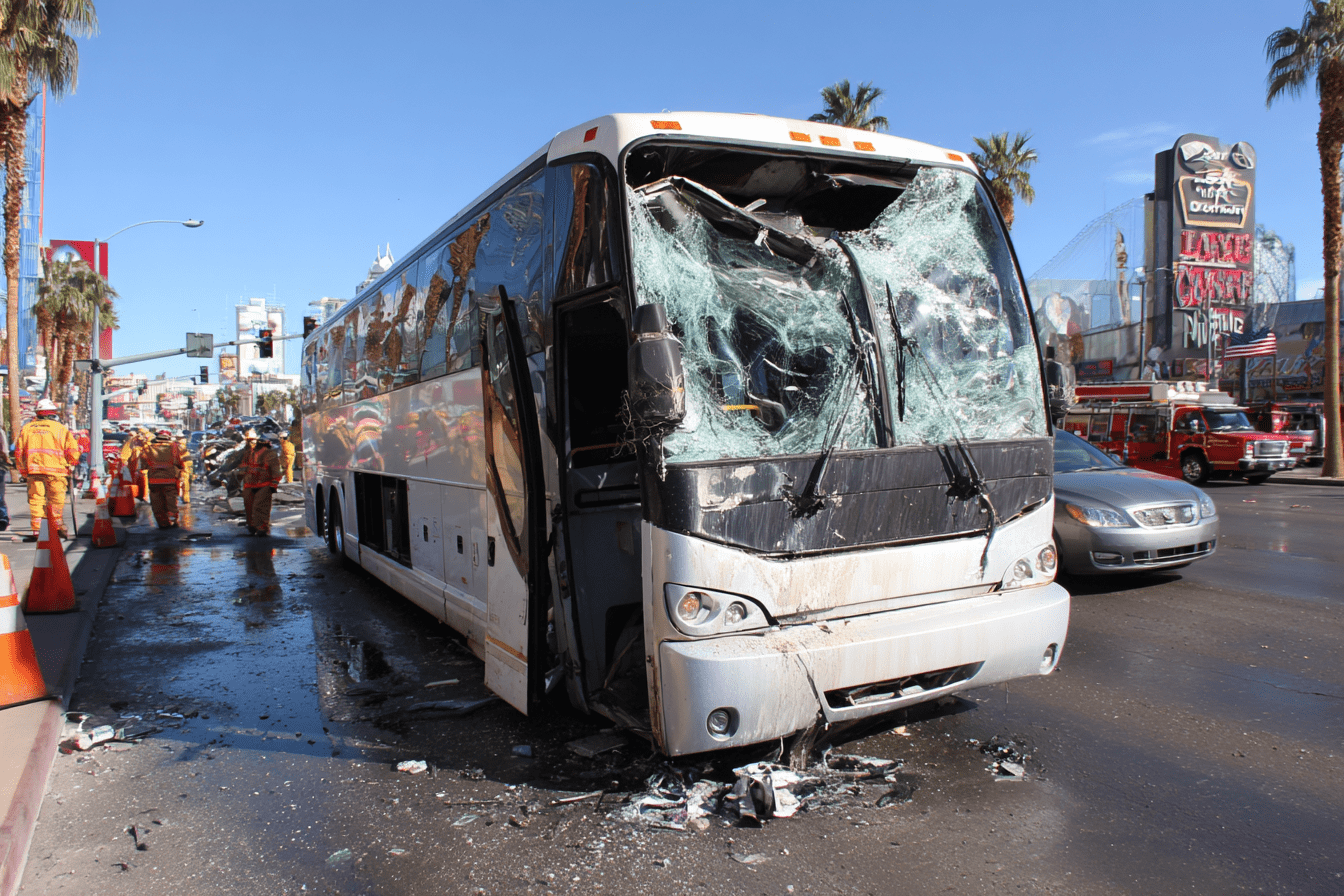
When you’re injured on a Las Vegas bus, determining liability becomes complex because multiple parties may share responsibility, including the bus driver, transit companies like RTC, tour operators, other motorists, or even government entities responsible for unsafe bus stops.
Understanding your rights is crucial since government-operated buses follow different claim procedures with shorter deadlines than private bus companies, and insurance coverage varies significantly between public transit, tour buses, and hotel shuttles.
This article explains the most common types of bus injury claims in Las Vegas, who can be held liable for your injuries, what compensation you can recover, and how a bus accident attorney can help you secure compensation.
What Bus Injury Claims Are Most Common in Las Vegas
Bus accidents in Las Vegas create unique injury patterns because passengers often stand without seatbelts and buses make sudden stops in heavy traffic. Bus incidents involving RTC Transit buses, tour buses, and hotel shuttles occur regularly in the city.
Sudden Stop or Swerve Falls Onboard
This is the most frequent claim we handle in Las Vegas. When a driver brakes hard or swerves to avoid Strip traffic, standing passengers get thrown forward or sideways. These sudden movements cause passengers to fall into seats, hit metal poles, or crash into other riders.
Common injuries from onboard falls include broken hips in elderly passengers, fractured wrists from trying to break a fall, and head trauma from striking poles or seat backs, all serious types of injuries that require immediate medical attention. Even seated passengers can be injured when the force throws them out of their seats.
Boarding and Alighting Injuries at Bus Stops
You can be seriously hurt while getting on or off a bus, especially at crowded casino stops. Wet or damaged steps cause passengers to slip and fall. Drivers sometimes pull away before you’re safely aboard or the doors close on you while you’re still getting on.
These incidents happen frequently at busy Strip locations where drivers feel pressure to stay on schedule. The combination of crowds, luggage, and rushed boarding creates dangerous conditions.
Wheelchair Ramp and Securement Failures
Bus companies must follow the Americans with Disabilities Act (ADA) when serving passengers with disabilities. Claims arise when wheelchair ramps malfunction, dump passengers onto the ground, or when staff fail to properly secure wheelchairs inside the bus.
These cases often involve serious injuries because wheelchair users have limited ability to protect themselves during a fall. Federal regulations create additional liability for bus companies that don’t maintain proper equipment.
Aisle and Interior Hazard Claims
You may have a valid claim if you slip on spilled drinks, trip over torn flooring, or get hurt by broken handrails inside the bus. Overcrowding on popular Las Vegas routes makes these hazards more dangerous because you can’t avoid them easily.
Bus companies have a duty to inspect and maintain safe conditions inside their vehicles. Broken seats, loose floor coverings, and damaged grab bars all create liability when they cause injuries.
Unsafe Bus Stop Design and Maintenance Claims
Sometimes the government entity responsible for bus stops can be held liable for injuries. This happens when stops have inadequate lighting, no protection from traffic, or are placed in dangerous locations without proper crosswalks.
Claims against government entities like Clark County or the City of Las Vegas require special procedures and have shorter deadlines than private company claims.
Negligent Security and Assaults on Buses or at Transit Centers
Bus companies and transit authorities must protect passengers from reasonably foreseeable crimes. Claims arise when drivers fail to intervene during assaults or when transit centers lack adequate security measures.
Late-night routes and certain downtown transit centers have known safety issues that create liability when passengers are attacked. Bus companies can’t ignore dangerous conditions and expect to avoid responsibility.
Mechanical Failure and Poor Maintenance Claims
Brake failures, tire blowouts, and steering problems cause some of the most serious bus accidents. These incidents often result from inadequate maintenance or ignoring known mechanical issues.
Bus company maintenance records become crucial evidence in these cases. We investigate whether the company followed proper inspection schedules and addressed known problems promptly.
Tour Bus Fatigue and Distraction Claims
Tour bus drivers often work long shifts, especially during busy convention periods in Las Vegas. Fatigued drivers make poor decisions and have slower reaction times. Federal hours-of-service regulations limit how long drivers can work, but companies sometimes pressure drivers to violate these rules.
Distracted driving claims involve drivers using cell phones or GPS devices while navigating busy tourist areas. These distractions can be deadly when combined with heavy pedestrian traffic around casinos.
Third-Party Driver Caused Bus Collisions
Many bus accidents are caused by other drivers who hit the bus or force it to swerve. These crashes often result from a DUI accident involving drunk drivers leaving casinos or tourists unfamiliar with Las Vegas traffic patterns.
Even when another driver causes the crash, the bus company may share liability if their driver could have avoided the accident through defensive driving.
Who Can Be Liable in a Las Vegas Bus Injury Claim
Determining who is responsible for your injuries is complex because multiple parties often share fault. We investigate every potential source of compensation to maximize your recovery.
- The Bus Driver: Individual drivers can be held liable for speeding, running red lights, distracted driving, or other negligent actions that cause injuries.
- Bus Companies: RTC, tour operators, and private shuttle companies are usually responsible for their drivers’ actions under vicarious liability laws. They can also face direct liability for negligent hiring, inadequate training, or poor vehicle maintenance.
- Other Motorists: When another driver’s carelessness causes a bus crash, they and their insurance company become liable for all resulting injuries.
- Government Entities: Cities and counties can be liable when poor road design, missing traffic signals, or dangerous bus stop placement contributes to accidents.
- Maintenance Contractors: Third-party companies hired to service buses can be held responsible when their negligent repairs cause mechanical failures that lead to crashes.
The key is identifying all potentially liable parties because bus accidents often involve multiple defendants with different insurance policies.
What Damages Can You Recover After a Bus Accident
Nevada law allows bus accident victims to seek compensation for all the ways an injury has affected their lives. We organize these damages into three main categories to ensure nothing is overlooked.
Economic Damages, Medical Bills, Lost Wages and More
Economic damages are your measurable financial losses that can be calculated with bills and records.
- Medical expenses: Emergency room visits, hospital stays, surgery costs, physical therapy, prescription medications, and medical equipment
- Lost income: Wages missed while unable to work, plus future earnings lost due to permanent disabilities
- Property damage: Personal items damaged in the accident like phones, laptops, or clothing
- Transportation costs: Getting to medical appointments when you can’t drive
Non-Economic Damages, Pain Suffering and Loss of Enjoyment
These damages compensate you for the physical pain and emotional distress caused by your injuries. Nevada doesn’t cap these damages in most personal injury cases, recognizing that serious injuries profoundly impact quality of life.
Non-economic damages include physical pain, emotional trauma, loss of enjoyment in activities you used to love, and the impact on relationships with family members.
Punitive Damages in Egregious Cases
Punitive damages are rare and only awarded when the defendant’s conduct was particularly reckless or intentional. These damages punish the wrongdoer and deter similar behavior in the future.
Examples include bus companies that knowingly operate vehicles with dangerous defects or drivers who were intoxicated while operating a bus.
Related: Average Bus Accident & Injury Compensation
How RTC and Public Transit Claims Work in Nevada
Claims against government-operated RTC buses follow different rules than private bus company claims. Government entities have special legal protections called sovereign immunity that create additional hurdles for injury victims.
You must file a formal Notice of Claim with the RTC within a very short time period after your accident. This deadline is much shorter than the standard two-year statute of limitations for personal injury claims. Missing this deadline can destroy your case completely.
The RTC is self-insured, meaning they handle claims through their own procedures rather than through a traditional insurance company. They often have caps on how much they’ll pay for claims, regardless of the severity of your injuries.
Private and Tour Bus Insurance Basics
Private bus companies must carry commercial insurance policies to cover passenger injuries; these policies typically range from $1.5 million to $5 million, but that coverage is shared among all victims in an accident.
| Bus Type | Typical Coverage | Claim Process | Special Considerations |
| RTC/Public Transit | Self-insured with government caps | Formal Notice of Claim required within days | Sovereign immunity protections |
| Tour/Charter Bus | $1.5-5 million commercial insurance | Standard insurance claim process | Federal safety regulations apply |
| Hotel Shuttles | $750k-2 million commercial insurance | Direct claim with insurance company | May have limited coverage for Las Vegas hotel injury incidents |
Understanding these differences is crucial because the claims process varies significantly depending on which type of bus was involved in your accident.
Learn More: Bus Passenger Accident Claim Process & Timeline
What Evidence Helps Your Bus Injury Claim
Strong evidence makes the difference between a successful claim and a denied one. Bus accident cases require specific types of proof that must be preserved quickly before it’s lost forever.
Preserve Bus Video and Telematics Immediately
Modern buses are equipped with multiple interior and exterior cameras and onboard systems that record speed, braking, and steering; this data is often overwritten within 72 hours unless immediate legal preservation requests are made.
We act quickly to send preservation letters to bus companies, demanding they save all electronic evidence from your accident. This evidence often proves exactly what the driver was doing when you got hurt.
Get Police Reports and RTC Incident Documentation
Official reports contain crucial details about your accident, including witness statements, driver citations, and preliminary fault determinations. The police report provides an objective account of what happened.
Bus companies also create internal incident reports that document their driver’s version of events and any immediate safety concerns. These reports can reveal important admissions or contradictions.
Secure Witnesses Photos and Complete Medical Records
Building a strong case requires thorough documentation from multiple sources:
- Passenger witnesses: Other riders who saw what happened and can testify about the driver’s actions
- Scene photographs: Images of vehicle damage, your visible injuries, and any hazards that contributed to the accident
- Medical documentation: Complete records from every healthcare provider who treated your injuries
- Bus identification: Photos of the bus number, route information, and exact location where the accident occurred
What Steps Should You Take After a Bus Accident
The actions you take immediately after a bus accident can significantly impact both your health and your legal rights. Following the right steps protects both your physical recovery and your financial compensation.
Get Medical Care First
Your health is the top priority after any accident. Call 911 immediately if you’re seriously injured, even if you think you might be okay. Adrenaline can mask serious injuries like internal bleeding or concussions that become life-threatening if untreated.
See a doctor within 24 hours even for seemingly minor injuries. Insurance companies look for gaps in medical treatment to argue that you weren’t really hurt or that your injuries came from something else.
Document the Scene Bus Number Route Time and Location
If you’re physically able, use your phone to gather important details before leaving the scene. Take photos of the bus number (usually displayed on the front and sides), the route name or number, and the exact intersection or location.
Record the time of day, weather conditions, and any visible damage to the bus or surrounding area. If you’re too injured to do this yourself, ask another passenger or bystander to help.
Avoid Recorded Statements to Insurers
The bus company’s insurance adjuster will likely contact you within hours or days requesting a recorded statement about the accident. You are not legally required to give one, and we strongly advise against it without legal representation.
These recorded statements are designed to find reasons to deny or minimize your claim. Adjusters ask leading questions to get you to admit fault or downplay your injuries before you fully understand their extent.
Contact a Bus Accident Lawyer Early
Contacting an experienced attorney immediately after your accident is the most important step for protecting your legal rights. We can take immediate action to preserve crucial evidence, handle all communications with insurance companies, and ensure you meet critical legal deadlines.
Bus accident cases involve complex regulations, multiple potential defendants, and aggressive insurance companies. Having experienced legal representation levels the playing field and maximizes your chances of fair compensation.
More on the Process: How to File a Bus Accident Lawsuit in Las Vegas
Can You Recover if You Were Partly at Fault?
Bus companies often try to blame injured passengers by claiming they weren’t holding on properly, were standing when they should have been seated, or weren’t paying attention. Nevada’s modified comparative negligence law still allows you to recover compensation as long as you’re less than 51% at fault.
Your final compensation gets reduced by your percentage of fault. For example, if you were awarded $100,000 but found 20% at fault, you’d receive $80,000. However, if you’re found 51% or more at fault, you can’t recover anything.
We aggressively fight these blame-shifting tactics using video evidence, witness testimony, and expert analysis to show that the bus driver’s actions were the primary cause of your injuries.
How Long Do Bus Injury Claims Take in Nevada
The timeline for resolving your bus accident claim depends on several factors, but most cases take between six months and two years to complete. Simple cases with clear liability and minor injuries may settle within a few months.
Complex cases involving serious injuries, disputed fault, or multiple claimants often take 12-18 months or longer. Several factors affect how long your case will take:
- Injury severity: More serious injuries require longer treatment periods before we can fully evaluate your damages
- Liability disputes: When fault is contested, we may need accident reconstruction experts and extensive investigation
- Multiple claimants: When many passengers are injured, insurance companies take longer to evaluate and settle claims
- Government defendants: Claims against RTC or other government entities involve additional procedural requirements
We keep you informed throughout the process and work efficiently to resolve your case as quickly as possible while ensuring you receive maximum compensation.
Need Help Filing a Bus Injury Claim?
If you’ve been injured in a Las Vegas bus accident, you don’t have to face the insurance companies alone.
At Ladah Injury & Car Accident Lawyers Las Vegas, our injury attorneys have extensive experience representing injury victims and has handled the kinds of bus accident claims described in this article. Our experience includes cases against RTC, major tour bus companies, and hotel shuttle operators throughout Las Vegas.
Bus accidents don’t happen during business hours, which is why we’re available 24/7 to help when you need us most.
Contact us for a free consultation to learn how we can help you recover the compensation you deserve. You pay no attorney fees unless we win your case.
Frequently Asked Questions
Do I Have a Claim for a Sudden Stop Without a Collision?
Yes, you can absolutely file a claim for injuries from sudden braking or swerving even when the bus never hits another vehicle. These “non-collision” incidents are actually among the most common bus injury claims we handle.
What if I Did Not Get the Bus Number or Route?
Don’t worry if you couldn’t record the bus details due to your injuries. We can often identify the specific bus using the time, location, and RTC dispatch records, plus surveillance footage from nearby businesses.
How Fast Is Bus Video Deleted and How Do We Preserve It?
Because bus surveillance video can be overwritten in as little as 72 hours, immediate legal action is critical. We send preservation letters within hours of being contacted to ensure this crucial evidence is saved.
Can the Bus Company Blame Me for Standing or Not Holding On?
While bus companies try to shift blame to passengers, Nevada law recognizes that buses must operate safely with standing passengers. Sudden movements that cause falls can still be the driver’s fault regardless of whether you were holding on.
What Happens When Multiple Passengers File Claims?
When several passengers are injured in one incident, the available insurance coverage must be shared among all victims. This makes aggressive legal representation essential to secure your fair portion of limited funds.
Can I Pursue a Las Vegas Claim if I Live Out of State?
Yes, we regularly represent tourists and visitors injured on Las Vegas buses through our experienced Las Vegas personal injury lawyer team.
How Do Contingency Fees and Costs Work?
We handle all bus accident cases on contingency, meaning you pay no attorney fees unless we win. We also advance all case costs including expert witnesses, medical records, and court filing fees so you never pay anything out of pocket.