
Nevada concealed carry laws require a permit to carry any hidden firearm. You must be 21, complete an 8-hour Nevada firearms course, pass a background check, and apply through your sheriff. Carrying concealed without a permit is a felony. Nevada is not constitutional carry, defines “concealed” broadly, restricts certain locations, and enforces serious penalties for violations.
Nevada operates under “shall-issue” concealed carry laws, requiring you to obtain a permit before carrying any hidden firearm, whether on your person, in a purse, backpack, or vehicle. You must be at least 21 years old, complete an 8-hour Nevada firearms safety course, pass a comprehensive background check, and apply through your local sheriff’s office. Possessing a concealed weapon without a valid permit is a Category C felony, punishable by 1-5 years in prison and fines of up to $10,000.
Understanding Nevada’s concealed carry requirements protects you from serious criminal charges and ensures you exercise your rights lawfully. The state defines “concealed” broadly, any firearm hidden from ordinary observation requires a permit, even if stored in your car’s glove box or carried in a bag. Nevada also maintains specific restrictions on where you can carry, reciprocity agreements with other states, and strict penalties for violations.
This article explains Nevada’s concealed carry laws, permit requirements, prohibited locations, and the legal consequences of violations.
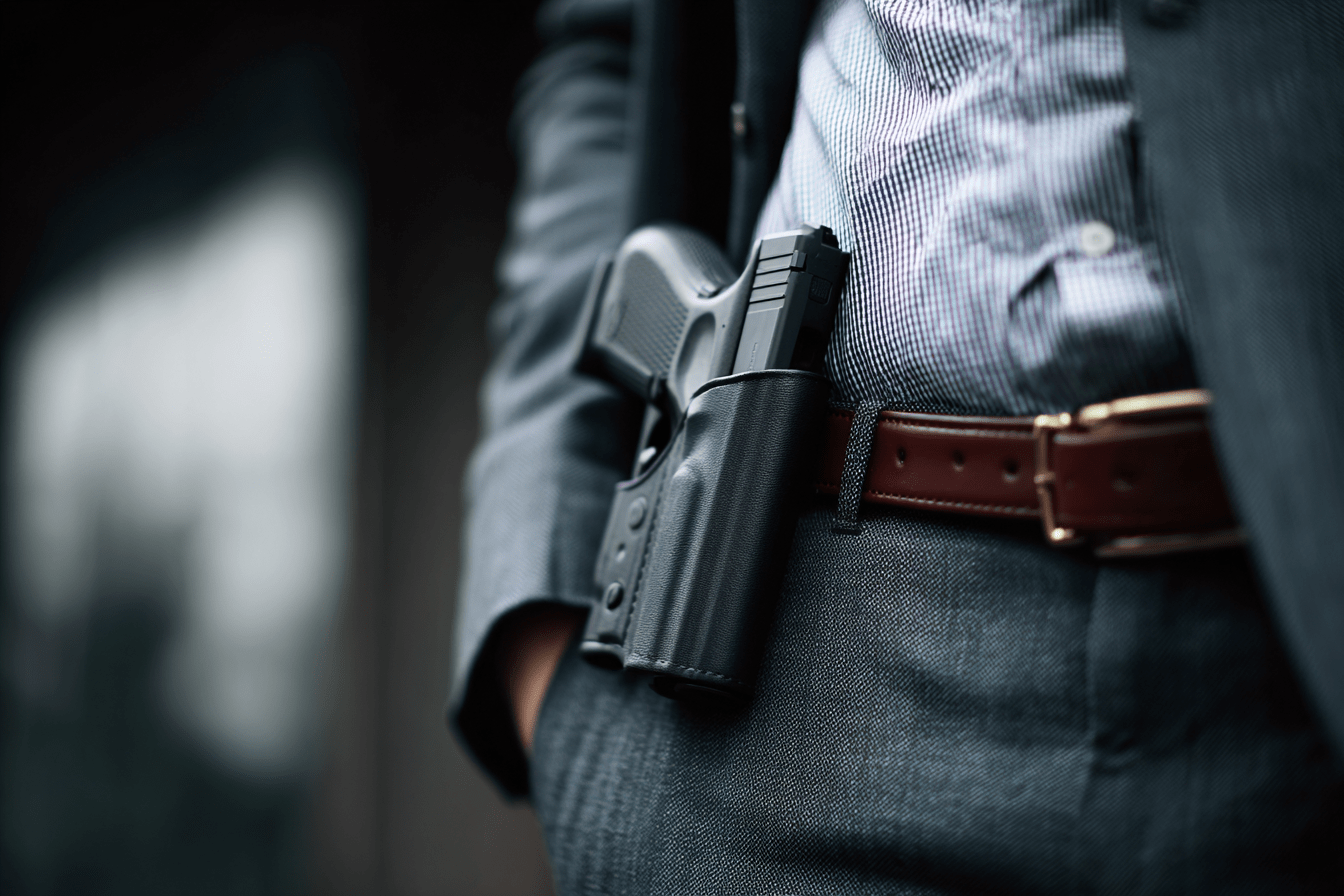
What Nevada Concealed Carry Requires
Nevada requires you to have a concealed firearm permit (CFP) to carry a hidden handgun. A concealed firearm is any gun you carry that’s not visible to people around you, whether it’s under your clothes, in a purse, or inside a backpack.
Nevada is a “shall-issue” state, which means the sheriff must give you a permit if you meet all the requirements. Both Nevada residents and people from other states can apply, but you must complete your training in Nevada and apply in person. If you’re injured in a firearm incident, Nevada’s modified comparative negligence rules may affect your compensation.
To get a permit, you must:
- Be at least 21 years old: The minimum age is 18 if you’re active military or honorably discharged
- Complete certified training: An 8-hour course taught by a Nevada-approved instructor
- Pass a background check: Including fingerprinting and criminal history review
- Be legally allowed to own guns: No disqualifying criminal convictions or court orders
Is Nevada Constitutional Carry?
Nevada is not a constitutional carry state. Constitutional carry means you can carry a concealed gun without a permit, Nevada doesn’t allow this.
Carrying a concealed firearm without a valid permit is a Category C felony in Nevada. This serious crime can result in imprisonment for 1 to 5 years and fines of up to $10,000.
Is Nevada an Open Carry State?
Open carry is generally permitted in Nevada for adults who are legally allowed to possess firearms. Open carry means your firearm is fully visible to anyone who looks at you.
The key difference is visibility, if any part of your gun is hidden from plain sight, Nevada considers it concealed carry and you need a permit. Your entire firearm and holster must be clearly visible to count as open carry.
What Counts as Concealed Carry in Nevada?
Nevada law defines concealed carry as a loaded or unloaded handgun carried upon a person in such a manner as not to be discernible by ordinary observation. Understanding this definition helps you avoid serious legal trouble.
Concealed carry (requires permit):
- Inside-the-waistband holsters under clothing
- Shoulder holsters covered by jackets
- Guns in purses, backpacks, or pockets
- Ankle holsters under pants
- Any firearm hidden from public view
Not concealed (no permit needed):
- Outside-the-waistband holsters that are fully visible
- Firearms stored in vehicle glove compartments when not on your person
- Guns openly displayed in proper holsters
Who Qualifies for a Nevada Concealed Carry Permit?
You can apply for a Nevada concealed carry permit if you meet specific legal requirements. Both residents and non-residents who complete Nevada training are eligible to apply.
Age and citizenship requirements:
- 21 years or older: Age 18 is acceptable for active military or honorably discharged veterans
- U.S. citizen or legal resident: Must provide proof of citizenship status
Criminal history requirements:
- No felony convictions: Any felony conviction disqualifies you permanently
- No recent violent crimes: No violent misdemeanor convictions
- No domestic violence: Any domestic violence conviction is disqualifying
Other disqualifying factors:
- DUI convictions: Applicants should not have any recent DUI convictions
- Mental health issues: No history of involuntary mental health commitment or adjudication that would disqualify you
- Court orders: No active restraining orders or red flag orders against you
- Medical marijuana: Current medical marijuana cardholders cannot get permits
What CCW Training Nevada Requires?
Nevada requires new applicants to complete a firearms safety course taught by an instructor approved by the state. The training must happen in Nevada, online courses and out-of-state training don’t count.
Your training course must include:
- Classroom instruction: Nevada firearm laws and safe handling practices
- Live-fire qualification: Demonstrating competence with a handgun at a shooting range
- Legal education: Understanding when and where you can legally carry
For permit renewals every 5 years, you only need a 4-hour refresher course with live-fire qualification. If your permit has expired for an extended period, you may be required to complete the full 8‑hour course again. Check with your local sheriff’s office for current requirements.
How to Apply for a Nevada CCW Permit?
You must submit your application to the sheriff’s office in your county of residence. In Las Vegas and Clark County, the Las Vegas Metropolitan Police Department (LVMPD) handles all applications.
Application Steps with LVMPD
The application process requires several steps completed in order. First, complete your certified 8-hour firearms training course and receive your certificate.
Next, gather your required documents including valid identification, proof of citizenship if born outside the U.S., and your training certificate. You can then complete the online application through LVMPD’s website.
After submitting your application, schedule an in-person appointment at the Records and Fingerprint Bureau. During this appointment, you’ll have your fingerprints taken and provide a photograph.
Finally, wait for your background check to complete, LVMPD will mail your permit if approved.
Fees and Processing Time in Clark County
The total cost for a new Nevada CCW permit is $99. This includes a $60 application fee and a $39 FBI background check fee.
These fees are non-refundable even if your application gets denied. Nevada law gives sheriff’s offices up to 120 days to process applications, though many are completed sooner.
How to Renew Your Nevada CCW?
Nevada CCW permits are valid for 5 years from the issue date. You should apply for renewal before your current permit expires to avoid complications.
Renewal Steps and Training
The renewal process is simpler than the initial application. You need to complete a 4-hour refresher course with live-fire qualification from a Nevada-certified instructor.
Submit your renewal application with an updated photograph and pay the $64 total fee ($25 renewal plus $39 FBI check). If you apply after your permit expires but within the renewal grace period, you may be charged a late fee.
After one year expired, you lose renewal eligibility and must start over with the full initial application process including the 8-hour training course.
Nevada Concealed Carry Reciprocity States
Nevada recognizes concealed carry permits from many other states, allowing visitors to carry legally with their home state permits. The reciprocity list can change, so always verify current status before traveling.
Nevada honors concealed carry permits from multiple other states; verify the current reciprocity list with the Nevada State Police or your county sheriff’s office.
New Residents and the 60-Day CCW Rule
If you move to Nevada with a valid out-of-state concealed carry permit, you have exactly 60 days to obtain a Nevada permit. After 60 days, your out-of-state permit becomes invalid for concealed carry in Nevada, even if it’s from a reciprocal state.
There are no exceptions or extensions to this rule. You must complete the full Nevada application process as a new resident, including the 8-hour training course.
Where You Can Carry in Nevada?
With a valid Nevada CCW permit, you can legally carry concealed firearms in most public places. Nevada law is generally permissive for permit holders in everyday locations.
You can carry in:
- Your personal vehicle: Both on your person and stored anywhere in the car
- State and national parks: Including hiking trails and camping areas
- Restaurants and bars: As long as you’re sober and the business doesn’t prohibit firearms
- Private property: Unless the owner specifically prohibits weapons
Always respect private property owners’ rights to prohibit firearms on their premises.
Where You Cannot Carry in Nevada?
Nevada law prohibits carrying firearms in certain sensitive locations, even with a valid permit. Violating these restrictions is a misdemeanor punishable by up to 6 months in jail and $1,000 in fines. If you’re injured by someone illegally carrying in these locations, you may need to file a personal injury lawsuit.
Always prohibited locations:
- Schools and childcare facilities: All K-12 schools, universities, and daycare centers
- Secured airport areas: Past TSA security checkpoints
- Government buildings: Courthouses, legislative buildings, and buildings with metal detectors
- Federal property: Post offices, VA hospitals, and federal buildings
- Hoover Dam: Special federal restrictions apply
Public buildings with restrictions:
- Any building that posts “no firearms” signs at entrances
- Buildings equipped with metal detectors and security screening
Can You Carry in Las Vegas Casinos, Hotels, and Bars?
Nevada state law doesn’t specifically prohibit concealed carry in casinos, hotels, or bars. However, these are private businesses that can set their own firearm policies.
Many Las Vegas Strip properties prohibit firearms through posted signs or written policies. If a business asks you to leave because you’re carrying a firearm, you must comply or face trespassing charges.
Additionally, you cannot carry a firearm in Nevada while intoxicated, having a blood alcohol content of 0.08% or higher is illegal.
Can You Carry a Gun in Your Car in Nevada?
Vehicle carry rules depend on whether you have a CCW permit. The rules are different for permit holders and those without permits.
With a CCW permit: You can carry a loaded, concealed handgun anywhere in your vehicle, on your person or stored in any compartment.
Without a CCW permit: You can transport handguns as long as they’re not concealed on your person. Store them in the glove box, center console, or trunk, or carry them openly in a visible holster.
Nevada prohibits having loaded rifles or shotguns with rounds in the chamber while in vehicles on public roads.
Do You Have a Duty to Inform Police?
Nevada doesn’t require you to tell police officers that you’re carrying a concealed firearm during traffic stops. You only need to provide information if the officer specifically asks.
If an officer asks to see your permit or asks if you have weapons, you must immediately provide both your CCW permit and identification. For everyone’s safety, keep your hands visible and calmly inform the officer about your firearm and permit.
Can You Carry While Using Alcohol or Drugs?
Under Nevada law, it is illegal to possess a firearm with a blood alcohol concentration of 0.08% or higher. The same rule applies if you’re under the influence of any controlled substance.
This misdemeanor offense can result in:
- Up to 6 months in jail
- Fines up to $1,000
- Possible CCW permit revocation
The only exception is possessing a firearm for self-defense in your own home.
What Nevada Law Says About Brandishing?
Brandishing means drawing or displaying a firearm in a threatening, angry, or rude manner when not acting in lawful self-defense. Nevada law makes brandishing illegal under most circumstances.
Brandishing is typically a misdemeanor, but pointing a firearm at someone can elevate the charge to a gross misdemeanor. If you use the firearm to threaten someone, you could face felony charges for assault with a deadly weapon.
Nevada Stand Your Ground and Castle Doctrine
Nevada’s self-defense laws provide strong legal protections when you face genuine threats to your life or safety.
Stand Your Ground: You have no legal duty to retreat from a threat if you’re in a place where you have a right to be and face imminent danger of death or serious bodily harm.
Castle Doctrine: This provides enhanced legal protection against intruders in your home or vehicle, justifying the use of deadly force under specific circumstances.
Both doctrines require that you reasonably believe you face imminent threat and that your response is proportional to the danger.
Penalties for Nevada Concealed Carry Violations
Violating Nevada’s concealed carry laws carries serious criminal penalties that can affect your future gun rights and freedom.
Common violations and penalties:
- Carrying without a permit is a Category C felony punishable by 1-5 years prison and a fine of up to $10,000.
- Carrying in prohibited locations: Misdemeanor with up to 6 months jail and $1,000 fine.
- Carrying while intoxicated: Misdemeanor with up to 6 months jail and $1,000 fine
- Forgetting your permit constitutes a civil infraction with a $25 fine.
Felony convictions result in permanent loss of gun rights and can affect employment, housing, and other opportunities.
Injured by Negligent Gun Use or Gun Violence?
If someone’s unlawful concealed carry, negligent firearm handling, or gun violence has injured you, you may have grounds for compensation. At Ladah Injury & Car Accident Lawyers Las Vegas, we help victims of firearm-related incidents seek justice.
We handle cases involving:
- Negligent security: Businesses that fail to enforce weapon policies or protect customers
- Accidental discharges: Injuries from improper gun handling or storage
- Unlawful brandishing: Assault cases involving illegal weapon display
- Shootings in prohibited areas: Incidents where weapons were illegally carried
As former insurance defense attorneys, we understand how these complex claims are defended and know the strategies to maximize your recovery. We offer free consultations, work on contingency (no fee unless we win), and provide 24/7 support throughout your case.
Frequently Asked Questions
Is Carrying a Gun in a Backpack Considered Concealed in Nevada?
Yes, any handgun carried in a backpack, purse, briefcase, or any other bag is legally considered concealed carry in Nevada. You must have a valid CCW permit to carry a firearm in any type of bag or container.
Can I Conceal Carry in Las Vegas Casinos or on the Strip?
While Nevada state law doesn’t prohibit it, most casinos and Strip properties ban firearms through their private property policies. You must leave if asked by security or management, or you’ll face trespassing charges.
Can I Carry a Gun in My Car in Nevada Without a Permit?
Yes, you can transport a handgun in your vehicle without a permit as long as it’s not concealed on your person. You can store it in the glove box, console, or trunk, or carry it openly in a visible holster.
Do “No Guns” Signs Carry the Force of Law in Nevada?
“No guns” signs on private property don’t carry specific legal penalties under gun laws, but refusing to leave when asked by the property owner constitutes criminal trespassing.
How Long Can New Residents Use an Out-of-State Permit?
New Nevada residents have exactly 60 days from establishing residency to obtain a Nevada CCW permit. After 60 days, their out-of-state permit becomes invalid for concealed carry regardless of reciprocity agreements.
Can I Carry in State or National Parks in Nevada?
Yes, you can carry concealed firearms in Nevada’s state and national parks with a valid permit. However, you cannot carry inside federal buildings located within those parks, such as visitor centers.
What Should I Do if Stopped by Police While Carrying?
You don’t need to volunteer that you’re carrying unless asked, but if an officer requests your permit or asks about weapons, you must immediately provide your CCW permit and identification.
Can I Carry at Schools or Colleges With Written Permission?
Nevada law generally prohibits firearms on all educational property, though limited exceptions exist for permit holders who receive specific written permission from school administration.
Can I Carry While Under 0.08 BAC?
While 0.08% is the legal limit, any alcohol impairment that affects your judgment could still result in legal trouble. It’s safest to avoid carrying when you’ve consumed any alcohol.
Does Nevada Have Stand Your Ground?
Yes, Nevada is a Stand Your Ground state, meaning you have no duty to retreat from a deadly threat when you’re in a place where you have a legal right to be.