
In a multi-car accident, the at-fault driver’s liability insurance pays for the damages caused by the policy holder. When multiple drivers share blame, multiple insurance companies pay based on each driver’s percentage of fault. Because Nevada is an at-fault state, financial responsibility follows whoever caused the crash, and your own coverage can fill the gaps when their limits run out.
A chain-reaction crash on I-15, US-95, or the 215 Beltway can involve three, four, or more vehicles, each with its own driver, insurer, and version of events. You may be dealing with injuries, a totaled car, and several adjusters calling at once.
Pileups rarely have one clear answer. Insurers dispute fault percentages, policy limits run out fast when multiple victims file claims, and adjusters use every tool available to pay you less than you are owed.
In this article, you will discover how Nevada’s fault rules apply to multi-car crashes, which policies pay and in what order, and how an automobile accident attorney specializing in multi-vehicle accidents can protect your claim from day one.
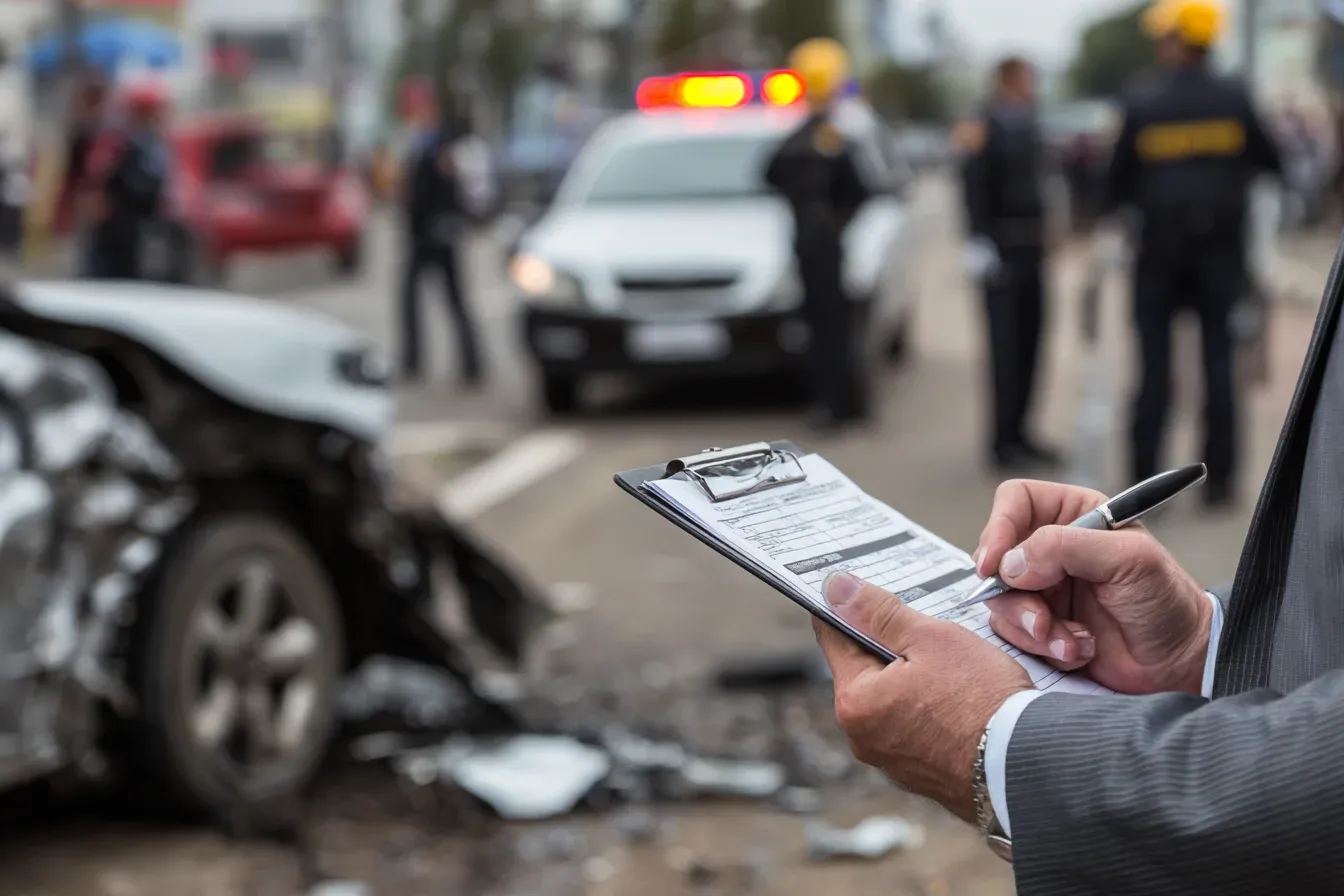
Who Pays First after a Multi Car Accident in Nevada?
In Nevada, the at-fault driver’s liability insurance pays first. When multiple drivers share blame, each driver’s insurer pays a share based on their percentage of fault.
Nevada is an at-fault state. This means the driver who caused the crash is financially responsible for your injuries and property damage, not you.
Every Nevada driver must carry minimum liability coverage of $25,000 per person for bodily injury, $50,000 per accident, and $20,000 for property damage. In a serious pileup, these limits are rarely enough to cover what injured victims actually lose.
How Comparative Negligence Affects Your Payout in Nevada
Nevada follows a legal rule called modified comparative negligence. This means your compensation is reduced by whatever percentage of fault is assigned to you.
You can still recover damages as long as you are 50% or less at fault. If you are found 51% or more at fault, you recover nothing.
Here is what that looks like in practice: if your damages total $100,000 and you are found 20% at fault for following too closely on I-15, your recovery is reduced by 20%, leaving you with $80,000.
Insurance adjusters use this rule aggressively. They will look for any reason, no matter how minor, to assign blame to you, because every percentage point they pin on you reduces what they must pay.
Our founder, Ramzy Ladah, spent years defending insurance companies at one of Nevada’s largest defense firms before switching sides. He knows every tactic adjusters use to shift fault onto injured drivers, and now we run that playbook against them.
A tactic we see repeatedly from adjusters in Las Vegas chain-reaction claims is assigning the middle driver a share of fault for following too closely, even when that driver was pushed forward by the car behind. What we see across these claims on I-15 near the Spaghetti Bowl and on the 215 Beltway is that damage patterns and black box data usually show which impact came first, and that sequence is what decides who really pays.
“What insurance companies like to do is find a way, even if they’re at fault, to assign what’s called comparative fault, in order to pay less.” – Adrian Karimi
What Insurance Covers a Multi Car Accident in Nevada?
In a pileup, several insurance policies can apply at once. Understanding which policy pays for what, and in what order, is the foundation of a strong recovery.
| Coverage Type | What It Pays For | When It Applies |
| Bodily Injury Liability | Medical bills, lost wages, pain and suffering | When another driver is at fault for your injuries |
| Property Damage Liability | Vehicle repairs or replacement | When another driver damaged your car |
| Collision | Your vehicle repairs, regardless of fault | When you need your car fixed quickly while fault is disputed |
| MedPay | Your immediate medical bills, regardless of fault | When you need bills covered before liability is resolved |
| Uninsured Motorist (UM) | Your injuries if the at-fault driver has no insurance | When an uninsured or hit-and-run driver caused the crash |
| Underinsured Motorist (UIM) | The gap when the at-fault driver’s limits fall short | When policy limits don’t cover your full damages |
| Commercial / Rideshare | High-limit coverage for business vehicles and Uber/Lyft | When a truck, delivery vehicle, or rideshare is involved |
At-Fault Driver’s Liability Coverage
The at-fault driver’s liability insurance is the primary source of compensation. Bodily injury liability covers your medical costs and losses. Property damage liability covers your vehicle repair or replacement.
When Multiple Drivers Share Fault
When two or more drivers contributed to the crash, each of their insurers pays according to their driver’s share of fault. Insurers will fight each other over those percentages and use every dispute as an excuse to delay paying you.
Your Own Collision and MedPay Coverage
Two types of coverage on your own policy can help while fault is being sorted out:
- Collision coverage: Pays to repair or replace your vehicle regardless of fault. You pay your deductible, and your insurer may then pursue reimbursement from the at-fault driver through a process called subrogation, meaning your insurer goes after the responsible party to recover what they paid you.
- MedPay: Covers your immediate medical bills up to your policy limit, regardless of fault. This keeps your treatment on track while the liability dispute plays out.
Uninsured and Underinsured Motorist Coverage
UM coverage protects you if the at-fault driver has no insurance. When the at-fault driver’s policy limits are not enough to cover your total losses, UIM coverage pays the remaining gap.
In a pileup with multiple injured victims, a single driver’s minimum-limit policy gets exhausted quickly. UM and UIM coverage are often the difference between a full recovery and a shortfall you cannot overcome on your own.
In one case we handled, a client was hit by an SUV at high speed in a three-car pileup on the freeway. Her car was totaled and she needed shoulder surgery that alone cost about $120,000, more than the other driver’s $100,000 policy could cover. Because she carried a $250,000 uninsured motorist policy, that coverage stacked on top of the other driver’s limits, and she was able to collect a total of $350,000 for her medical bills and pain and suffering.
“Nevada has a much more advantageous law in collecting the money you’re paying for every month to be able to collect.” – Adrian Karimi
Commercial Vehicle and Rideshare Policies
If a delivery truck, 18-wheeler, or rideshare driver is involved in the crash, their commercial insurance may apply, and the rules governing who pays if you’re in an accident in a company car can bring much higher policy limits into play.
How Fault Is Determined after a Chain Reaction Crash
Insurers do not take your account of what happened at face value. Hard evidence reconstructs the crash sequence, and the results directly determine who pays and how much.
Police Reports and Scene Evidence
A police report captures officer observations, driver statements, and any citations issued at the scene. It carries real weight with insurers, but it is not the final word on fault. It is the starting point.
Vehicle Damage and Black Box Data
Damage patterns show the sequence of impacts: which vehicle struck which, and in what order. Most modern cars are equipped with an Event Data Recorder (EDR), a built-in ‘black box’ that records speed, braking force, and throttle position in the seconds before a collision.
Camera Footage and Witnesses
Las Vegas has surveillance everywhere: NDOT traffic cameras on I-15 and US-95, casino systems, business security cameras, and private dashcams. We act quickly to preserve any available footage before it can be lost or overwritten.
One pattern we consistently see in Las Vegas multi-car crashes is that NDOT freeway cameras and nearby business video capture the first impact even when every driver remembers it differently. In our experience, getting a preservation request out within days is often what separates a clear fault picture from a three-way dispute between insurers.
How Insurers Try to Minimize What They Pay You
Adjusters are trained to protect their company’s bottom line, not yours. These are the tactics they rely on most:
- “You were following too closely”: Pinning even a small percentage of fault on you reduces what they owe under Nevada’s comparative negligence rule.
- “Give us a recorded statement”: They are looking for something you say that they can twist to deny or reduce your claim.
- “Settle now”: A pressure tactic to close your claim before you know the full extent of your injuries or future medical needs.
Common Multi Car Accident Scenarios in Nevada
Most pileups follow one of three patterns. The scenario of your crash shapes the fault analysis and the arguments insurers will make against you.
Rear-End Chain Reactions
The driver who starts the chain by rear-ending the first vehicle usually bears primary fault. Middle drivers can share blame if they were following too closely or came to a stop in an unsafe way.
Intersection Pileups
A driver who runs a red light or fails to yield at a Las Vegas intersection can trigger a cascade of secondary collisions. The initial violator carries primary fault, but drivers who were speeding or distracted may share partial responsibility.
Weather and Low-Visibility Crashes
Dust storms, flash floods, and sudden fog are real hazards on Nevada highways. Nevada’s basic speed law (NRS 484B.600) requires drivers to slow down for weather and road conditions, and a driver who fails to do so can be held liable even if they did not cause the very first impact.
What Compensation Can You Recover after a Multi Car Accident?
Nevada law allows you to recover both economic and non-economic damages. Economic damages are your measurable financial losses, and non-economic damages cover the personal impact the crash has had on your life.
You can claim compensation for:
- All current and future medical bills
- Lost wages and reduced earning capacity
- Vehicle repair or replacement
- Pain and suffering
- Emotional distress and loss of enjoyment of life
- Wrongful death damages if a family member was killed
We have secured substantial recoveries for Nevada injury victims, including significant wrongful-death and serious head-injury settlements and jury verdicts. Those results come from preparing every case as if it is going to trial, which forces insurers to pay what a claim is actually worth.
Try our Nevada car accident settlement calculator
“I was rear-ended when I was pregnant and had to have multiple surgeries. I’m beyond grateful for everybody and I would definitely recommend Ramzy Ladah and his law firm to anyone who’s looking for a great lawyer.” – J.L
What to Do after a Multi Car Accident in Nevada
The steps you take in the first hours after a pileup directly shape the strength of your claim.
Call 911 and Get Medical Care
Report the crash immediately and accept medical attention at the scene. Adrenaline can mask serious injuries like concussions, internal bleeding, and soft tissue damage, so get checked out even if you feel fine.
Document the Scene
If it is safe, photograph every vehicle, the damage, license plates, skid marks, and road conditions before anything is moved or towed.
Exchange Information with Every Driver
Collect the name, phone number, license plate number, and insurance details of every driver involved, and ask whether they own the vehicle, since what happens if someone else is driving the car can change which policy ultimately pays. Get witness contact information as well, because their accounts can make or break your case.
Do Not Give a Recorded Statement to the Other Driver’s Insurer
Notify your own insurer that the accident occurred. Do not give a recorded statement to any other driver’s insurance company. It will be used to reduce or deny your claim, not to help you.
“Insurance companies pretend to be your friend. But they’re only trying to set you up to fail.” – Adrian Karimi
Call Ladah Injury & Car Accident Lawyers Las Vegas
Insurance companies have legal teams working against you from day one. You deserve an expert who will fight back with the same preparation and a track record that proves it.
How Long You Have to File a Multi Car Accident Claim in Nevada
Nevada gives you two years from the accident date to file a personal injury lawsuit under NRS 11.190(4)(e). For property damage claims, the deadline is three years.
Missing that deadline means permanently losing your right to any compensation. Surveillance footage gets deleted, witnesses forget, and EDR data becomes harder to recover. The sooner we get involved, the stronger your case.
“I had another lawyer before I got in this car accident but my lawyer didn’t work the way I wanted. Ramzy Ladah does exactly what I want. The way he fights in court for me was really good. It was like my family member fighting for a family member.” – Dina Martinez
Frequently Asked Questions
Is the Rear Driver Always at Fault in a Three-Car Rear-End Crash in Nevada?
Not always. The last driver in line usually bears primary blame, but a middle driver can share fault if they were following too closely or stopped in an unsafe way.
Will Using My Own Coverage after a Pileup Raise My Insurance Rates?
Using your own coverage when another driver caused the crash typically does not trigger a significant rate increase, especially when your insurer recovers what it paid through subrogation from the at-fault driver.
Who Pays for a Rental Car after a Multi Car Accident in Las Vegas?
The at-fault driver’s property damage liability policy or your own rental reimbursement coverage pays for your rental while the liability dispute is being resolved.
What if a Hit-and-Run Driver Started the Chain Reaction in Nevada?
Your uninsured motorist (UM) coverage is designed for this situation. It steps in to pay for your injuries and damages when the responsible driver fled the scene or cannot be identified.
Can I Recover Compensation if I Was Pushed into the Car Ahead of Me?
Yes. If a driver struck you from behind with enough force to push your vehicle into the car in front, the driver who initiated the collision is typically responsible for all resulting damages.
What if the At-Fault Driver Was Working or Driving for Rideshare at the Time of the Crash?
Their employer’s commercial insurance or the rideshare company’s policy, often $1 million or more, may apply, giving you access to far more compensation than a standard personal auto policy would provide.
Contact Ladah Injury & Car Accident Lawyers Las Vegas
We have recovered over $400 million for injured Nevadans. Ramzy Ladah is a Nevada personal injury attorney with extensive experience securing substantial recoveries for clients.
We have three offices across Las Vegas (Downtown, North Las Vegas, and Spring Valley) with 24/7 availability and direct cell-phone access to your attorney. We work on contingency, which means you pay nothing unless we win. Call (702) 252-0055 for a free consultation.
By Your Side, Securing Your Future.